
A rainy-day counting game built from household decisions
Use the child’s curiosity as the starting point. Counting, naming and comparing can appear in play, but the adult need not assess every answer or force a learning target.
The situation to understand
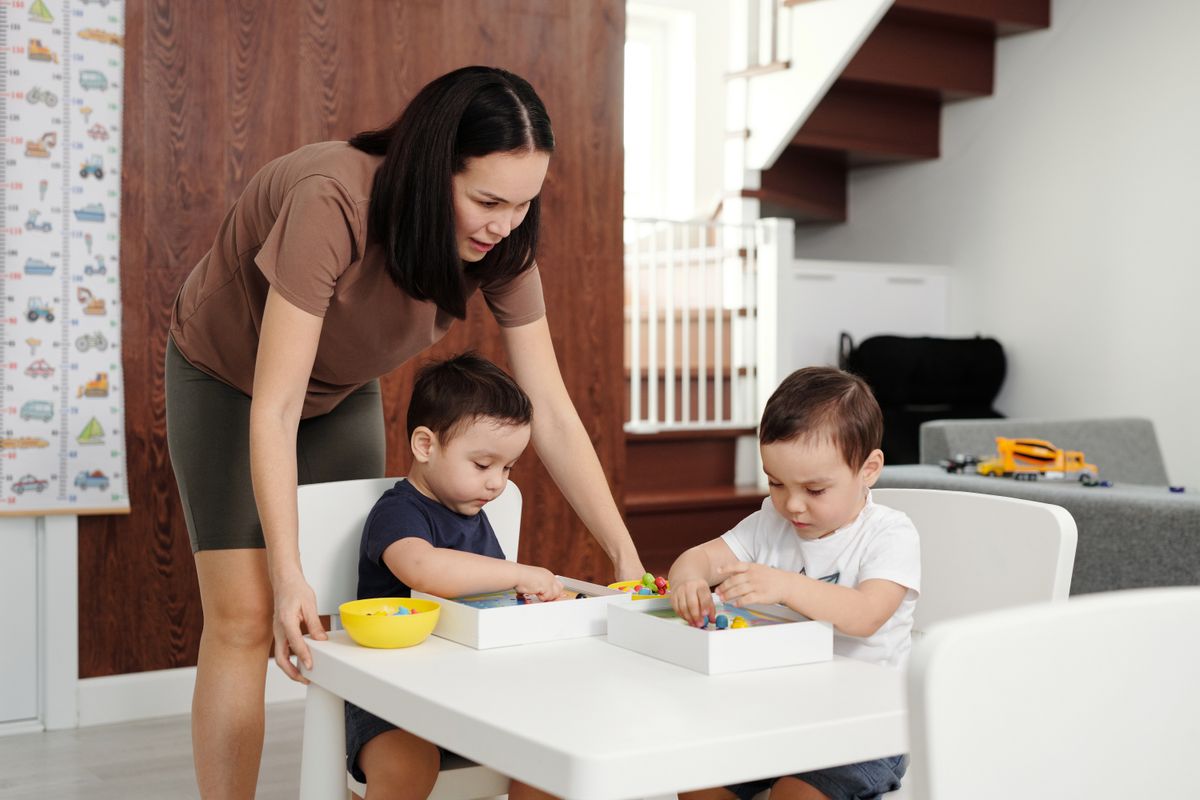
Rain cancels the outing and a caregiver searches for educational activities while the child follows them into the kitchen. An ordinary sorting task can become a small shared game without turning the afternoon into a lesson plan.
UNICEF’s home-environment evidence includes June 2026 play data and recognizes everyday caregiver interaction as part of early learning. Use the child’s curiosity as the starting point. Counting, naming and comparing can appear in play, but the adult need not assess every answer or force a learning target.
A closer look at the practical details
The game can follow the household task without turning the child into unpaid help. Give them a small set of safe materials and let the sorting become imaginary if they prefer. A child who makes a sock shop may begin assigning customers, prices or stories; follow one of those ideas. If they count inaccurately, respond naturally where it matters to the play instead of stopping everything for correction. The caregiver can model counting while handling another group. A playful exchange gives the child opportunities to hear language, explain a choice and try again without a formal score.
Check whether the wording fits
To begin, offer safe objects that can be sorted in more than one way, such as large socks or plastic cups. Use words that the person involved understands and that describe the actual decision. Avoid a label that sounds authoritative but leaves the practical meaning unexplained. Ask whether the wording reflects their experience too. A child may need a shorter explanation; an adult may need a clearer description of scope. Adjust the language without reducing the person’s opportunity to ask a question or describe a concern.
Keep the action separate from a verdict
One practical move is to ask the child how they would group the objects and follow their explanation. Present it as a response to the situation rather than a verdict on somebody’s personality. Explain the observable concern, invite the other person’s account and decide the next action from that information. Do not require agreement with a negative label before offering help. A person can participate in solving a specific problem while disagreeing with your initial interpretation of why it happened.
Choose a review that can happen
After you introduce one playful challenge, such as finding a different way to make two groups, decide how you will revisit the outcome without creating another large obligation. Choose an ordinary moment when the people involved are available, and ask about one useful observation rather than demanding a complete account. If something urgent arises before then, use the appropriate support route immediately. Otherwise, allow enough experience to judge the arrangement on more than one isolated success or setback.
Words to begin with
A possible opening: “You put the stripey socks together. Is there another way we could sort them, or would you like to make a shop instead?”
A complication worth addressing
Choose materials that fit the child’s age and abilities. Stop when interest fades rather than extending the game because the adult hoped to cover more concepts.
What to notice next
Look for whether the child explains a choice, tries a new idea or invites the adult into their version of the game.
Sources & further reading
Source links support the factual context. Practical examples and suggested workflows are original editorial guidance. Sources checked October 5, 2026.
Spotted something we should correct? Send a correction. Read our editorial policy.